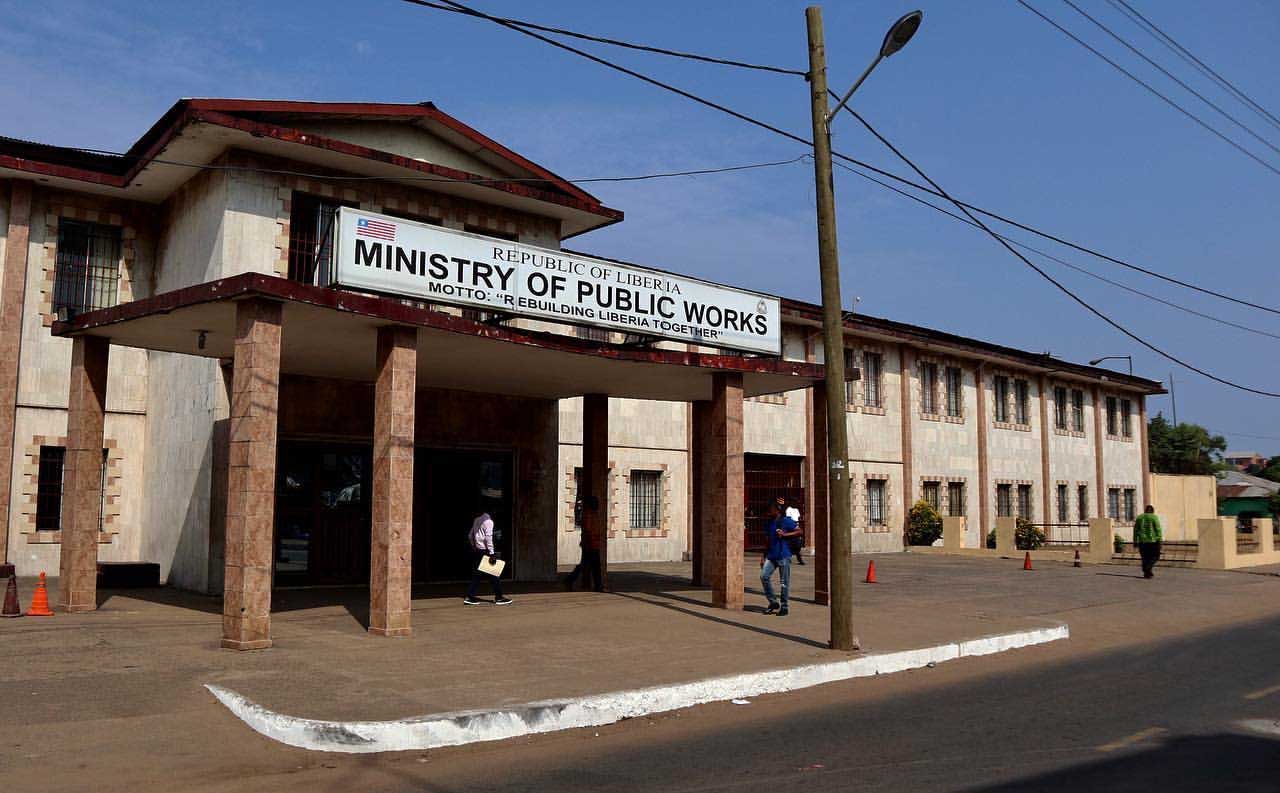
The Ministry of Public Works, alongside its partners, launched a five-year plan dubbed “Infrastructure Strategic Plan 2025-2029” on Wednesday in Monrovia. The launch brought together stakeholders from different parastatals, including the Ministry of Public Works (Organizer), the Ministry of Finance and Development Planning, the National Road Fund, as well as Donor Partners, primarily the World Bank and the African Development Bank.
Making special remarks, Public Works Minister Roland Layfette Gidddings intimated that the Strategic Plan will guide implementation as the Ministry seeks to develop the Road Sector over the next five years. He reaffirmed the Ministry’s strategic vision, termed the “Raw Aggression Vision,” which aims to exceed expected outcomes in the plan.
According to him, the Ministry of Public Works anticipates extending the targeted 485km of paved roads by aiming to pave 700km of roads. Minister Giddings also lauded his team and partners, noting that over the years Liberia has been bedeviled by two major constraints to economic growth-the lack of sustainable energy and road network access, but said the Government has prioritized the two sectors as key drivers for investment.
“We have identified major growth corridors that are being developed: the corridor that runs into Central Liberia; to Nimba, to the Southeast, the Coastal Highway, and the corridor that runs to Bo Water Side, which is being advanced through a PPP Agreement or Private Financing”, Minister Giddings concluded.
For his part, the Deputy Minister for Technical Services, Prince Tambah, stated that the plan is more than a roadmap; it’s a commitment to transforming Liberia’s infrastructure landscape, driving economic growth, and improving the quality of life for all Liberians. He furthered: “Over the next five years, we aim to construct, rehabilitate, and maintain approximately 4,000 kilometers of roads across the country with an estimated budget of US$925,307,028.67.
Based on the strategic plan, the following will be carried out including the construction of approximately 500 kilometers of new primary roads and drainage structures, focusing on connecting rural communities to markets and boosting agriculture; construction of 1,090 kilometers of secondary road networks and 2500 kilometers of new links of feeder roads; rehabilitate 124 kilometers of existing urban roads, enhancing safety and reducing travel time and maintenance of 125 kilometers of paved urban roads to reduce vehicle maintenance cost and travel time among others.
Additionally, the Assistant Minister for Planning, Research and Programmes, Rahin Bility, asserted that the Plan drew from the AfDB-funded 2022 Master Plan, and outlines the core mandate and functions of the Ministry. The Assistant Minister said the Infrastructure Strategic Plan carries economic and social reliefs that enhance mobility and social cohesion.
Assistant Minister Bility also indicated that the Plan is basically a foundation for social development and service delivery through coordinated financing, planning, and research management. “The Infrastructure Strategic Plan aligns with Pillar II of the AAID, which is the National Plan, and primarily focuses on the development of modern, reliable and climate-resilient infrastructure to socioeconomic development”, he emphasized.
Meanwhile, the Assistant Minister for Development Planning, representing Minister Augustine Ngafuan, pledged the ministry’s commitment to increasing the allocation for roads, which are crucial for national development outcomes. He then expressed satisfaction over the Ministry of Public Works’ commitment to exceed its targets in terms of road pavement. Assistant Minister Barchue, however, recommended a more holistic infrastructure strategic plan that focuses on other synergies within the road sector.