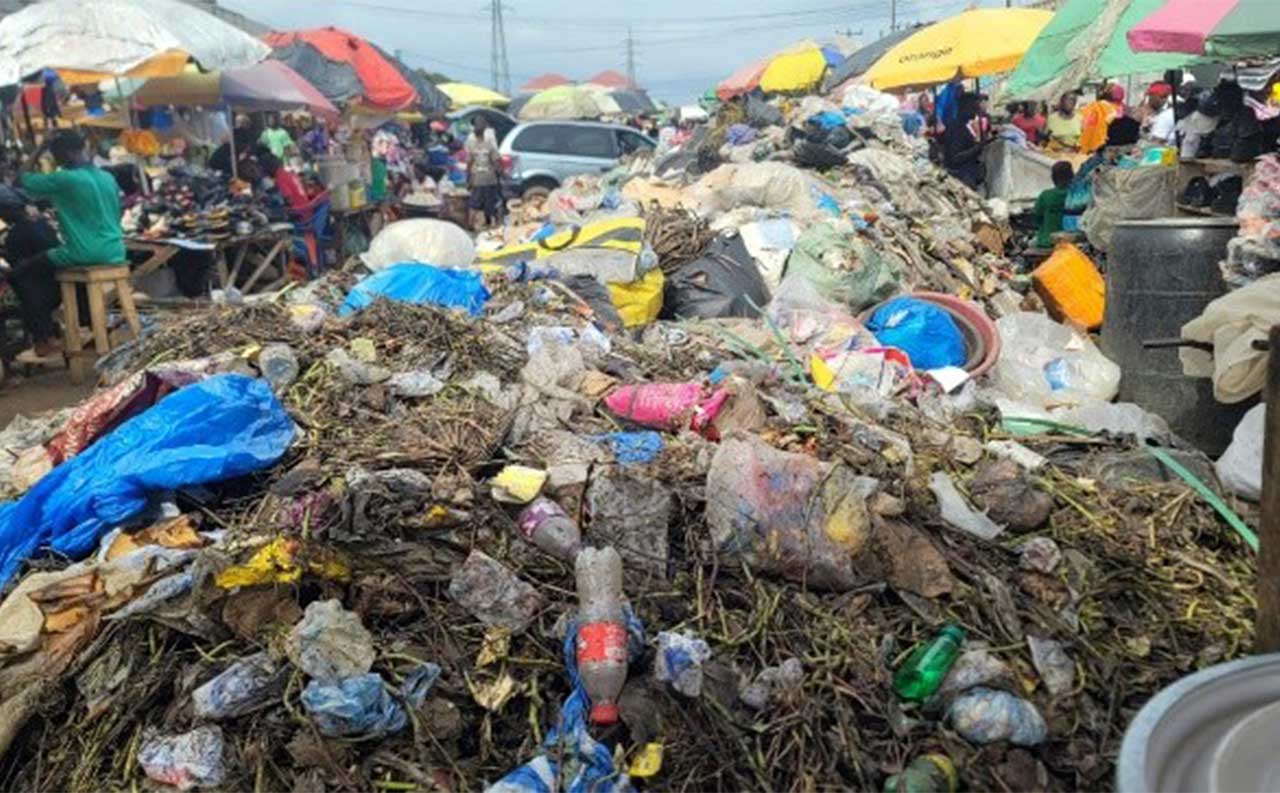
Residents and vendors in the Duala Market are said to be facing life threats due to the excessively filthy nature of the area, which hosts one of the nation’s biggest public markets. This publication has established that waves of frustration and despair are sweeping through the bustling Duala Market in Montserrado County as piles of unmanaged garbage continue to overwhelm the area, leaving marketers and customers fearful for their health and livelihoods.
During a recent visit by our reporter, vendors expressed deep concern over what they described as “a worsening public health crisis” created by the mounting filth. According to them, the market has become almost unrecognizable, with trash blocking pathways, oozing foul odors, and attracting swarms of flies and pests.
Fatu, a food seller, said, “We are getting sick every day because of this dirt,” pointing to a heap of decomposing waste. We sell food here, but look at the condition we are forced to work in. It is shameful and dangerous.” Another frustrated slippers seller added, “The garbage has taken over the entire market. We cannot breathe properly. Customers are afraid to come here. How are we supposed to survive like this?”
Meanwhile, some vendors blamed the situation on prolonged neglect and a lack of regular waste collection in the area. For others, it’s the fear of outbreaks of cholera, typhoid, and other sanitation-related illnesses if urgent action is ignored. In their collective plea, sellers are calling on the government, particularly the Monrovia City Corporation (MCC), to intervene swiftly and restore decency to one of the county’s busiest commercial hubs.
“We are begging the MCC and the government to come to our rescue. If nothing is done soon, the sickness will only get worse,” a group of sellers urged. As Duala continues to grapple with worsening sanitation, residents and business owners hope that authorities will respond before the Christmas festival and prevent an even greater health catastrophe.
The Monrovia City Corporation has consistently attributed these waste management crises to daunting challenges, including a lack of sufficient government funding to recruit and support adequate manpower and procure the machinery necessary for removing, transporting, and recycling waste.