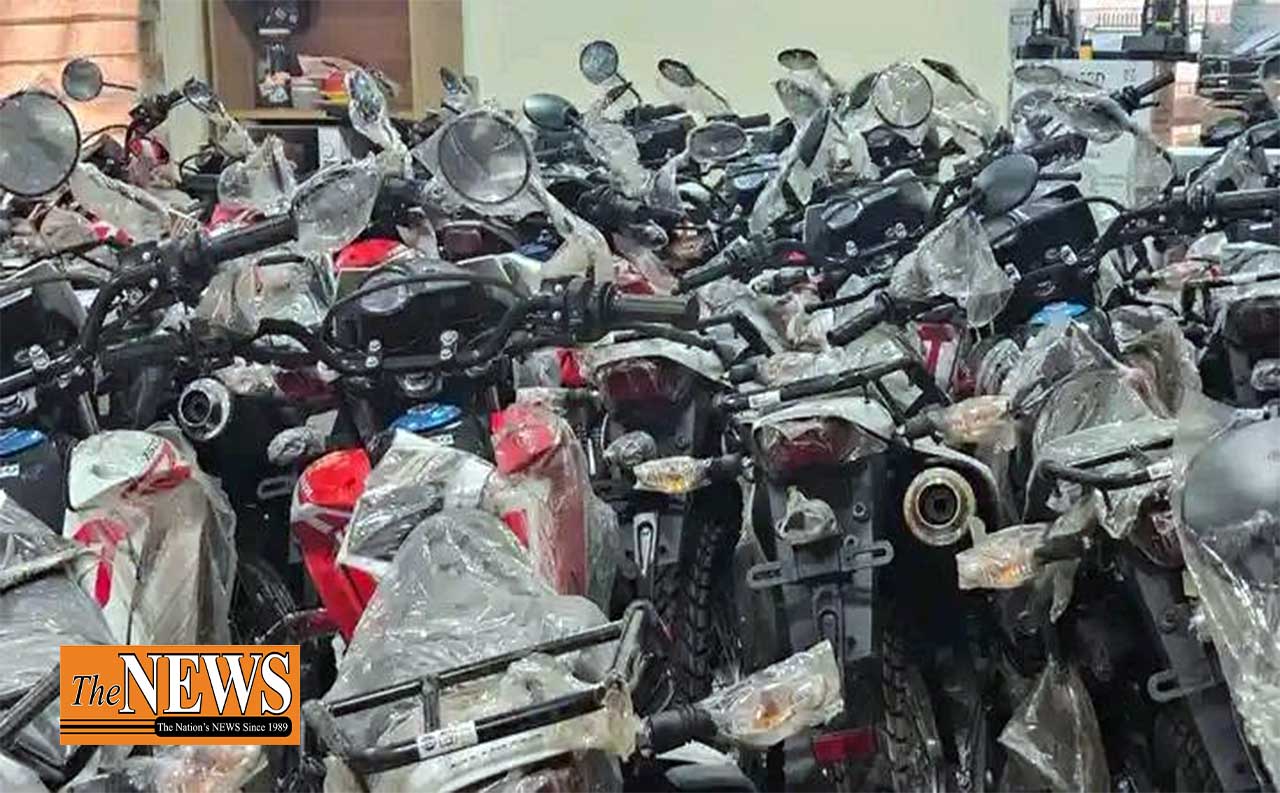
The World Bank Country Office has donated 50 motorbikes to the National Public Health Institute of Liberia (NPHIL) under its supported Health Security Program in Western and Central Africa (HSPWCA).
The program was approved as a US$500 million regional IDA-financed multiphase operation involving Liberia, Cabo Verde, Guinea and ECOWAS in its first phase. Its overall purpose is to strengthen countries’ capacity to prevent, detect and respond to health emergencies, while improving regional collaboration and applying a One Health approach that links human, animal and environmental health.
The donation of 50 motorbikes, out of the 115 planned for NPHIL, is more than a logistical contribution. It directly supports the Health Security Project’s detection and early response components.
NPHIL surveillance officers are required to travel to health facilities, communities, and hard-to-reach locations to conduct disease surveillance, investigate alerts, collect information, verify suspected cases, and provide technical support to county and district health teams.
In many parts of Liberia, transportation remains a significant operational constraint. The donation is a strategic investment in Liberia’s public health surveillance system, rather than simply a donation of transportation equipment.
The World Bank’s Health Security Program seeks to ensure that Liberia has the systems, institutions, trained personnel, information, laboratories, and operational resources required to identify threats early and respond before they become large-scale outbreaks.
For NPHIL, the 115 motorbikes will provide an important operational link between the national surveillance system and communities across the country. The first 50 motorbikes now delivered represent the initial phase of this support, with the remaining 65 expected to further expand the mobility of surveillance personnel.
This investment is especially timely given Liberia’s continued emphasis on epidemic preparedness and the strengthening of its surveillance and rapid-response capacities following the country’s experience with Ebola and subsequent public health emergencies.
The motorbikes are intended to put the country’s health-security system on the ground—closer to communities, health facilities and potential disease threats—so that NPHIL and its county surveillance teams can detect, investigate and respond to public health emergencies more rapidly.